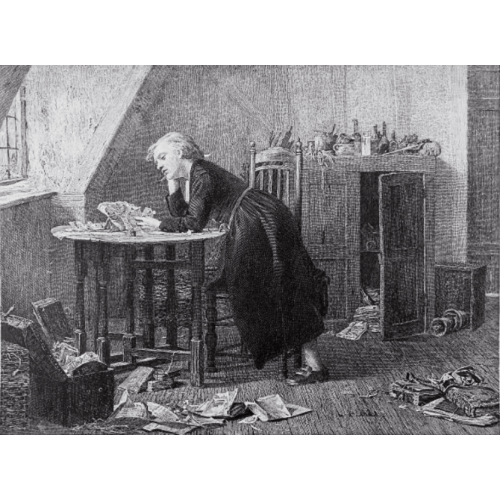
Thomas Chatterton’s “Holiday Afternoon”
By Michael Hill
It’s a bitter cold day, so much so that poetry is frozen in my keyboard. I’m supposed to write a poem tonight for group and I cannot find the poetry key. What is the key of poetry for cold? What is the key of poetry for bitter?
During the first inauguration of the most unpoetic president we have ever had, I tweeted quotes from philosophers about democracy, justice, and writing. During his second inauguration, I have mostly just sat and looked at a blank page. I have only just warmed up my keyboard because it is so bitterly cold; I must move if I am to breathe.
An unpoetic president elected by a populace I cannot understand had a dampening effect on my lines during the first term. On the most doom-laden days, I tended to write short angry bursts or long, nonsensical diatribes in uncertain stanzas that meandered off into nothing once they recognized their own mistrust of the line.
Poetry felt unreal when people were being deported due to the accents in their voices. Writing tercets seemed futile when words in our media detached themselves from things like meaning, truth, common sense. Who cares what a haiku elicits when the climate will freeze us in fear?
At some point, though, I became more productive with my poetry during the Trump years. Maybe because at the end of his term, I was locked in my house and worried about my breath and the breath of my children and decided I needed to write before we all died. Maybe because the little poems that appeared in my doom scrolls—Children Locked in Cages; President Praises Putin; Trump Looks Up Into the Sun During Eclipse—seemed themselves to be rewriting our shared meanings.
Now, at the start of another age of desperate poetry, I am writing poetry into a machine that may well betray me and may well have voted for Trump. This computer, previously “my computer,” has aligned herself with the new standard of literacy and this standard has been built upon the tenuous cultural connection between our minds and tongues. Sure, she says she takes no position on politics, but we know that she subscribes to a Trumpian sense of meaning. Words jumble into words and become immaterial so long as they keep jumbling.
Despair is possible. Frozen language is possible. A decision to stare into a wall and disengage is possible. But if we allow these things to happen, we allow others and their computers to control the fate of our language.
As poets, we must breathe deep, move, and survive.
Poetry claims / reclaims language. Poetry invents new possibilities for meaning. Poetry reasserts form when form is abandoned by those who claim no authority matters. Poetry creates audience when faces in the audience have been shunted outside the power of language and the logic of the lyric. Poetry allows us to feel the extents of ourselves again—our fingers, toes, the tendrils of our language-connected souls.
Despite the cold. The bitterness. The belief that none of this matters. We must write a poem. To survive. The winter will kill us if we do not act.

 losing our grip on purpose