“Multiplicity”

By Ava Hischak

(click to enlarge)

Medium of Artwork:

Watercolor and Gouache


Dimension of Artwork:

14″ x 18″

Artist Statement

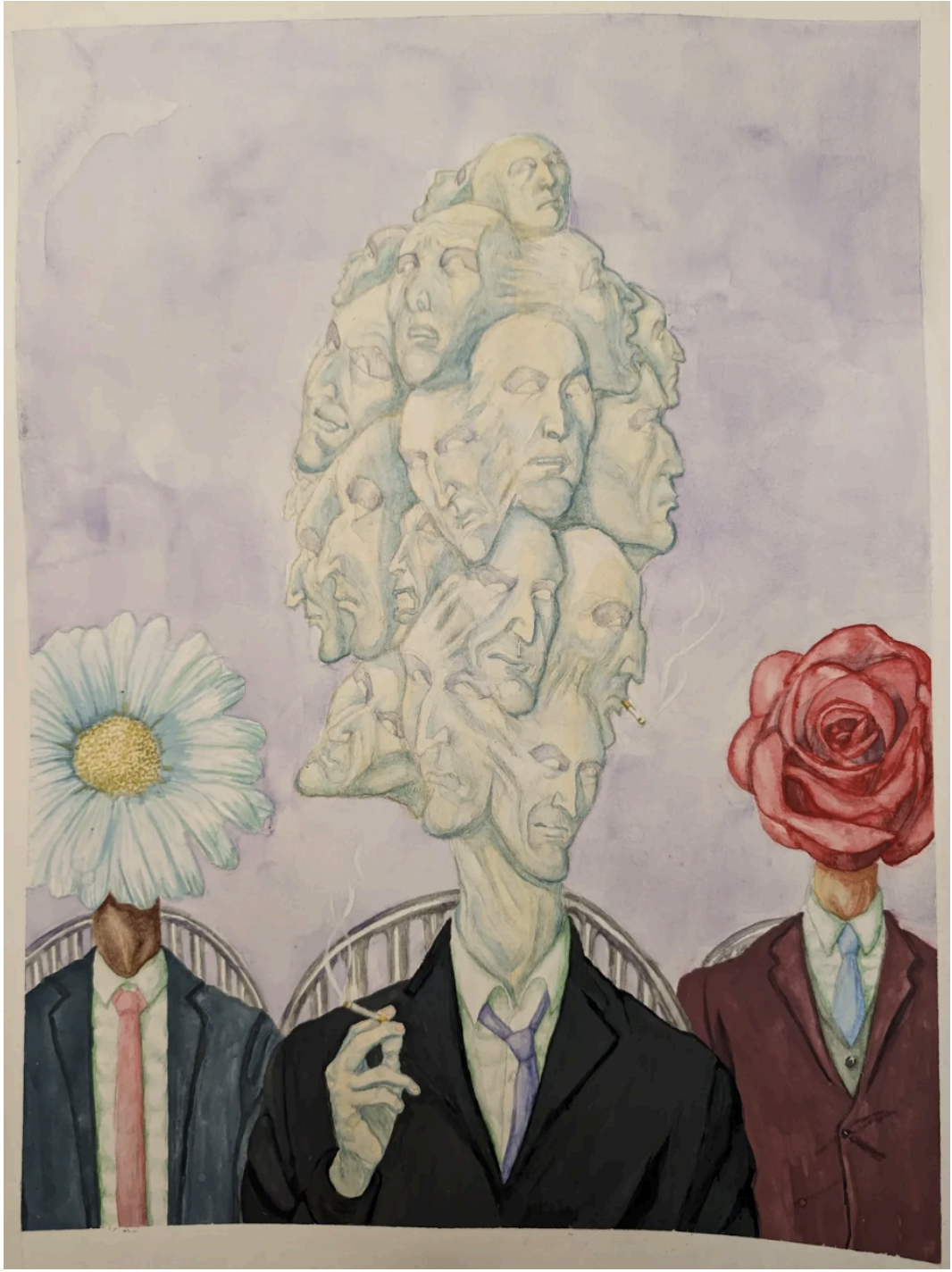
“My painting explores the tension between the conscious and repressed identity, drawing from psychological theories of the unconscious and the fragmented self. The central figure, with its grotesque mass of different faces, represents a fractured psyche. Each face symbolizes suppressed emotions, hidden desires, or conflicting aspects of his identity. Unlike the controlled and polished personas on either side of him, this figure’s shadow self is fully exposed to the viewer. His internal chaos is externalized, making visible what is often buried within the unconscious mind. In contrast, the two flower-headed figures symbolize the persona—the socially acceptable mask individuals wear to navigate the world. Their carefully constructed appearances, devoid of human expression, suggest a suppression of authentic emotion. Their floral heads, while aesthetically pleasing, hint at their artificial identities, dictated by external expectations rather than inner truth. Unlike the fragmented figure, they have sacrificed complexity for conformity. They present a seamless, controlled version of selfhood. This dynamic reflects the psychological battle between authenticity and social expectations. The many-faced figure in the center embodies the raw, unstable nature of the unconscious, rejecting societal norms and embracing the multiplicity of human experience. Meanwhile, the two flower-headed figures illustrate the pressures of conformity, where maintaining a pristine exterior requires the suppression of deeper, more chaotic truths. By revealing the internal fragmentation of the central figure and the detached perfection of the others, the painting questions the nature of identity itself. Is a cohesive self an illusion? Must individuality always be sacrificed for social acceptance? And what does it mean to truly express one’s unconscious self? These themes push the boundaries of psychological theory, imagining a world where identity is fluid, shifting, and constantly in tension between what is real and what is expected.”