“Woman on Canvas”

By Ebelle Shum
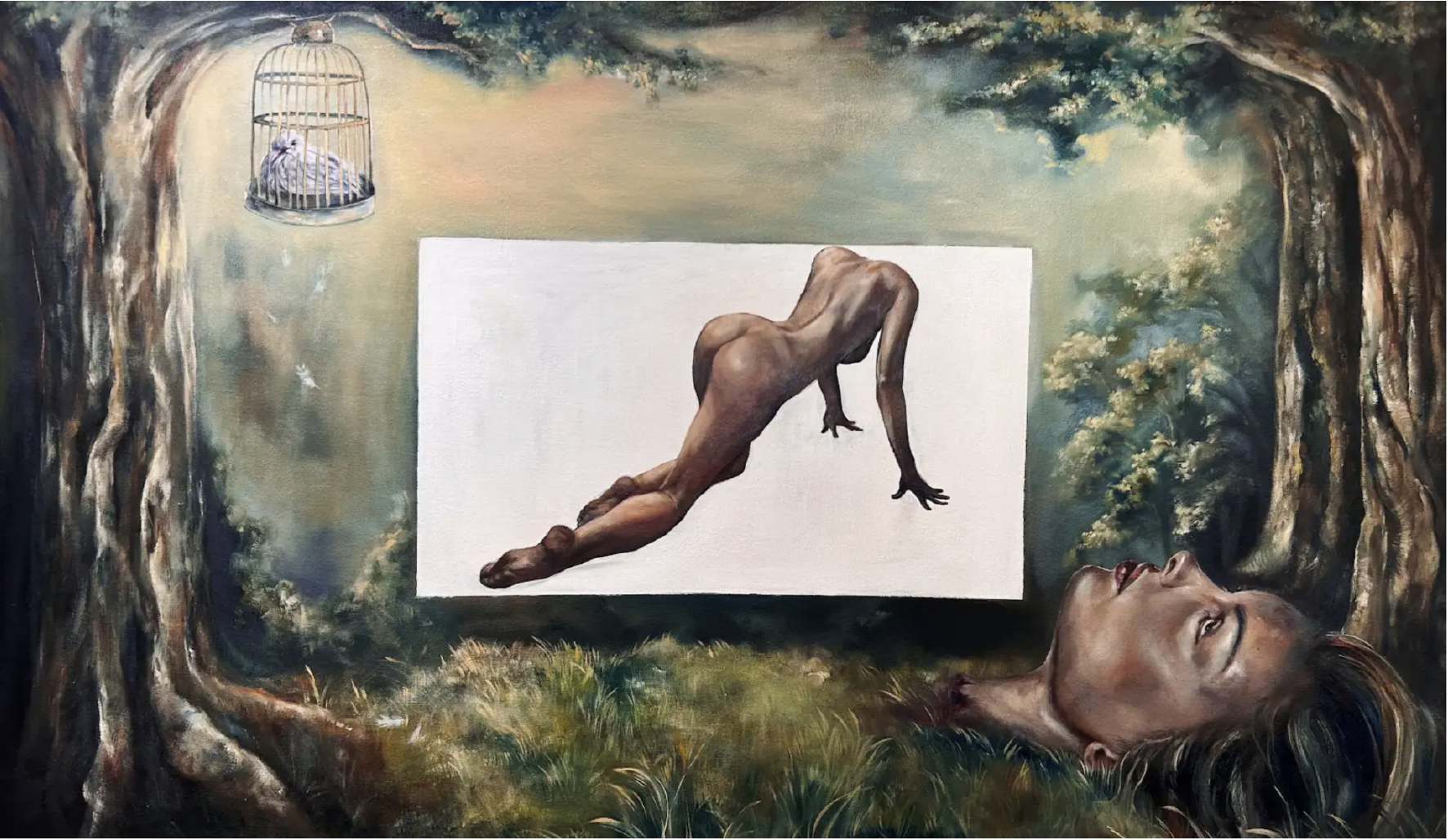

(click to enlarge)

Medium of Artwork:

Oil on canvas

Dimension of Artwork:

48” x 60”

Artist Statement

“Featuring a ‘painting within a painting’ motif, the white frame serves as a symbolic boundary, representing the true ‘painting’, or the reality imposed upon the subject. This frame becomes a focal point, emphasizing the sexualized and constrained nature of the figure’s existence. In contrast, the surrounding foliage expands beyond the confines of the frame, evoking a sense of escapism and dissociation. The lush, untamed greenery suggests an emotional or psychological retreat, a space where the figure within the painting seeks refuge from the rigid definitions and expectations encapsulated by the frame. I see this work catering to the themes of ‘The Traumatic Surreal’, ‘Dreamscapes of Freedom’, and ‘Aesthetics of Resistance’ based on the relation to the theme of escapism. The need to escape our feminine confines into the surreal reflects all women’s trauma—we always dream of something more beyond our reality. If it’s being sexualized, we dream of being in a world of only women. If it’s being oppressed, we dream of vanishing our oppressor. If trauma reoccurs, we dream of being somewhere better. This artwork reflects this mentality, offering a sense of security for women, despite their gruesome nature. Furthermore, this work challenges the gaze of the audience—centralizing a brutal depiction of the crawling woman’s decapitated head draws attention away from the body, reducing the sexualization of the Woman on Canvas. Thus: my paintings enter into dialogue with Art History and the canonical representations of the female form, utilizing and mimicking old master techniques and colors to insinuate timelessness. The speed of my method of painting in oil paint is evident, illustrated in the natural background or space of the work. The female nude emerges as a dominant subject, carefully situated within imagined natural landscapes, serving as a focal point in my exploration of identity and sexualization within contemporary discourse. However, through the intentional obscurity of genitalia, I prompt viewers to confront the gaze without reducing my subjects to mere objects of sexual desire, regulating the degree of sexualization while engaging with feminist perspectives. Thus, I twist narratives on the power dynamics inherent in the act of gazing through the judgment present in my characters. Challenging the traditional notions of beauty and agency, I invite viewers to reconsider their perceptions of the nude in art. The female nude becomes not just a subject, but a conduit for exploring the complexities of power, identity, and representation. I want viewers to question the dynamics of looking and to contemplate the intersections of desire, agency, and control.”