“Now We Have to Live: Finding Healing and Hope in A Man Called Otto”
by Chidera Onyebuchi
The following film contains graphic depictions of suicide, which some viewers may find troubling. If you or someone you know is struggling, information and crisis resources are available at
That’s enough now, darling. You’re angry and sad, I know, but now we have to live.
A young Otto is seated on a bed in an examination room with a sombre look. The medical examiner holds up Otto’s chest x-ray and tells him he has a genetic disease:
hypertrophic cardiomyopathy
(an enlarged heart). On his way home, at the train station, he meets Sonya, a woman who would become the deepest love of his life, after he finds her book and boards her train—the wrong train, yet the one that leads him to a life of love and meaning. Years later, Sonya passes away and an old Otto is consumed by a grief so profound it panel beats him into surliness, before he embarks on a mission to join his late wife.
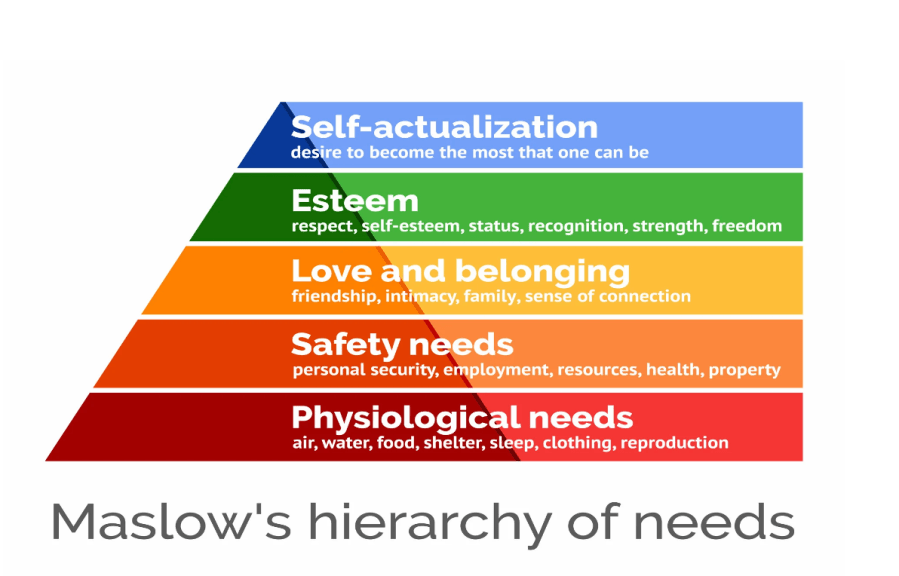
Otto’s healing can be viewed through the lens of Maslow’s Hierarchy of Needs: a motivational theory in psychology comprising a five-tier model of human needs, often depicted as hierarchical levels within a pyramid. 1
(See Image Above: Simply Psychology)
While Maslow initially proposed that lower needs must be relatively satisfied before higher ones, modern research suggests people often pursue multiple needs simultaneously.2
Otto is not the sort of man to visit a therapist or admit that Sonya left the world and took his reason to live with her. It is a pregnant Marisol who moves into the neighbourhood with her husband and two daughters that signifies therapy and opens him to the protective factors that help him heal, from using her boot to prevent Otto from shutting the door on her, to unintentionally ruining his various suicide attempts.
The first thing Marisol offers Otto is, Arroz con pollo, a popular Mexican dish. While a steaming home-cooked meal is soothing, it does not deter Otto from his mission, shedding light on why it is the least in Maslow’s hierarchy of needs: Otto simply eats the meal and returns to his mission. Marisol interrupts Otto’s second attempt, offering him her father’s favourite cookies, Salpores, which he takes and returns to his car filled with poisonous fumes. It is Marisol’s violent banging on the garage door that causes him to leave the car.
In Maslow’s pyramid, safety needs come next, and in Otto’s healing, it manifests as emotional security, which a pregnant Marisol gives him through defiant assurances of her presence in his life. She has conversations with him that forgo superficial pity, leaning into something deeper: acceptance.
Otto begins to feel safe enough to tolerate Marisol, safe enough to teach her how to drive, while Marisol feels safe enough to hug Otto, offering him physical comfort.
Otto begins to aspire to Love and Belonging in the hierarchy of needs. He is more keen to help Marisol and bond with her children, who love him and draw him in as part of their family. Even if it seems as though Otto’s world is grey, the children view him in colour, peer beneath the clouds of grief shrouding him. To be loved, to be accepted, to be seen, and to belong is rewarding to Otto.
Otto returns to the train station where he met Sonya, intending to jump onto the tracks, but before he can, another man collapses onto them. Otto pulls the man onto the pavement but remains on the track, staring at the incoming train, staring at Sonya urging him to leave, enough, and he climbs back onto the pavement. While Otto seems not to care that he has become a national hero for saving the man, the recognition and respect he receives after the event boosts to his self-esteem, which ranks fourth on Maslow’s hierarchy of needs. This bolstering prepares him to progress onto self-Actualization, the highest in the pyramid (note: this was before Maslow included Transcendence at a later interval).
However, before Otto achieves this highest state of being, he’s first forced to confront his grief.
Marisol tries to convince him to let go of Sonya’s things: her pink jacket, scarf and hat still hanging as though she never left. Otto tells her angrily that she is too loud—the voices of her and others would drown out Sonya’s—and that he never wants to forget it. A furious Otto further says, “There was nothing before Sonya and nothing after her!” Marisol interjects, “I am something!”
We understand why he keeps to himself. We understand why he’s scared of letting himself live.
Otto’s heart seems to fail him at that moment. He runs into the house, leaving Marisol to bang on his windows, calling out to him as he sinks into the memory of when he and Sonya were expecting a baby. Otto is visibly shaken, which sets him back on his mission. This time, he gets a rifle.
“I know you have a little life in you yet, I know you have a little strength left.” Kate Bush’s “The Woman’s Work” plays as Otto wraps his arms around a pregnant Sonya at Niagara Falls.
Otto’s fourth attempt is an interplay between past and present as he sits, surrounded by white nylons hung high. The bus passes by lilac hedging. He leaves Sonya and goes to the restroom. He cocks the gun. The bus topples. The rifle’s mouth grazes his chin, and pain flares across his face. Sonya, on a hospital bed with a flat belly. Sonya, in front of him. That’s enough now darling. You’re angry and sad, I know, but now we have to live.
Malcom, a previous student of Sonya’s whom Otto has helped on certain occasions, shocks Otto out of his trance with a knock on the door, mistakenly setting off the gun to the ceiling. Malcolm needs somewhere to rest—his father has kicked him out for becoming a boy. Otto lets him in, and receives a sense of purpose, a protective factor, that by saving Malcolm, he saves himself. In the morning, Malcolm offers Otto coffee. Otto is slightly taken aback, but he accepts. There is a shift which is proven further when he goes on his morning rounds checking the neighbourhood, but this time, he’s not alone, but with community. Malcolm, and Jimmy, a neighbour, reinstate the need for love and belonging for both Otto and Malcolm, and for Jimmy who makes his morning walks alone.
The home of Otto’s friends, Reuben and Shari, is about to be taken from them, giving Otto a new mission. He tells Sonya at her resting place that he has things to do before he can join her. Otto is saying to both Sonya and by extension, the viewers, that he has a reason to live now, that his life has a purpose, that he has people who need him—he wants to live again. Maslow refers to this as self-actualization—humans want to feel they are fulfilling their potential and making the most of their abilities.3
Before Otto can help Reuben and Shari, he requires Marisol’s help, and before Marisol can help him, she needs him to open up to her. Marisol explains her worries and cares for him. She tells him to “…be happy someone is trying to help you get through a crappy day even if they’re an idiot…” and goes on to tell him that we can’t do life alone. She shows us that while patience with our friends struggling with hardships is important, there comes a time when we must call them out of their pain—reminding them that we are here for them— but they must first allow us in. Because Otto’s sense of purpose is strengthened and he now wants to reach the point of self-actualization, he tells Marisol about the accident that led to Sonya’s miscarriage and paralysis, and despite their troubles, Sonya encourages him to keep living.
Marisol’s presence in Otto’s life and her acceptance of him enable Otto to extend the same grace he has received. In turn, he offers care and kindness to a stray cat and Malcolm.
When considering mental health, protective factors such as “strong social connections, hope for the future, positive goals, problem-solving skills, strong family relationships, positive experiences with parents, and a safe environment…”4 are often taken into account.
Marisol pulls him out of his grief and gives him the strength to open up to these factors: his bond with Marisol and her family, his connection with Malcolm, the cat, and his neighbours, and his reflections on his relationships with his father and Sonya. Otto gains the stability and agency he needs to heal, to take out Sonya’s things.
“Til You’re Home” by Rita Wilson and Sebastian Yaria plays. Picture frames of Otto with Marisol’s family hang on the wall. The joy, peace, and belonging Marisol and her family gave him dance in his smiles. This is how Otto heals and attains the peace he needs to leave the world and join Sonya.
References:
 losing our grip on purpose